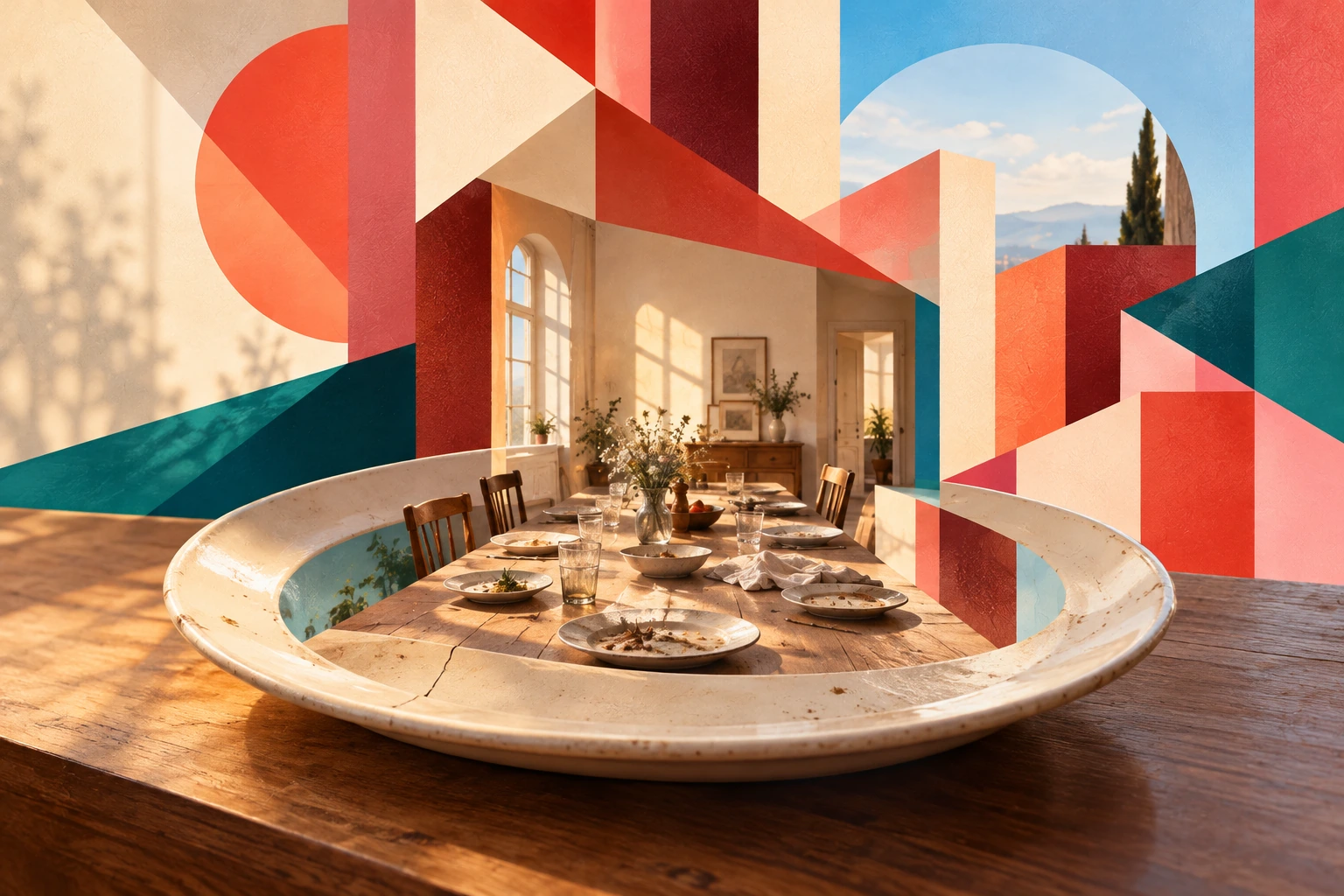
A person may spend seventy or eighty years building a life. A home, books, music, photographs, furniture, collections, recipes, travel, relationships, routines, jokes, tastes, and countless ordinary objects gradually become part of that life. Then, in later years, this entire physical world may contract very quickly. A large family home becomes an apartment in senior living. A move-in date creates a deadline. A lifetime of possessions must suddenly be divided into keep, give away, sell, donate, and discard.
There is already an ecosystem for getting these things done. Realtors sell the house. Senior move managers coordinate the move. Organizers sort possessions. Estate-sale companies liquidate them. Photo managers digitize photographs.
But underneath all of these necessary transactions is a question that often belongs to no one:
As the physical footprint of a life becomes smaller, how do we keep its human meaning from shrinking with it?
Dignity does not require keeping everything. Most things can go. But a person should not have to treat decades of accumulated life as surplus inventory simply because space is shrinking and a deadline is approaching.
We have elaborate rituals for building a life. There are weddings and wedding registries, housewarmings, baby showers. Friends and family participate in accumulation and beginnings.
We have very little that is symmetrical at the other end.
A serving platter that appeared at thirty family Thanksgivings may eventually become “serving platter — $25” at an estate sale.
I want to rethink that experience. Before a house is staged into a property for the next buyer, perhaps there is a Memory Walk while it is still their home. We do not need to catalogue thousands of objects. We identify the smaller number that carry disproportionate meaning.
There might even be an inverse of the wedding registry: a Legacy Registry. Decades ago, family and friends helped a couple build a home. Now they can help them release it. An object might be given to someone who wants to continue using it, purchased by a friend, exchanged for a charitable contribution, or simply documented before entering a conventional estate sale. The proceeds might fund a cruise, an experience with grandchildren, philanthropy, or whatever the couple wants from their next chapter.
The material assets of one chapter can become resources for the next.
These are possibilities I am exploring. I have not run that registry. But I keep thinking about the platter: its price is easy to write on a label. The dinner table it belonged to is much harder to carry into the next home.
When the information generated by a human life vastly exceeds what another person or a single conversation can hold, how do we compress it without flattening the person inside it?
A photograph might survive for another hundred years while the only person who knows who is in it may be gone next year. I need the names, dates and sources, but also the recurring jokes, the tastes, the disagreements, the things this person would never have chosen. A beautiful summary that loses those differences has kept very little.
But even a very good archive leaves me wanting to make something. Someone who has lived for eighty or ninety years possesses decades of creative material: books, music, food, photographs, love, loss, travel, humor, disappointments, family language, rituals, objects, and ways of seeing the world.
I imagine a couple who has just downsized. Their books are gone. Their CD collection has been donated. Much of their kitchen has been distributed. Then one day they hear a new song that has never existed before.
Its lyrics draw from books they loved. It contains an image from a dish they made every anniversary. Its musical language reflects the collection of CDs that once occupied their shelves. Somewhere in it is a private reference that only their family would immediately recognize.
The physical objects have disappeared, yet something they carried has returned in a new form.
One More Idea, which I made after talking with Mary, gave me an early glimpse of this. The work does not exist primarily so that her descendants can remember her someday. Mary herself is the first audience. She can hear it, laugh, recognize herself, disagree with it, correct it, and have another thought because of it.
That last part becomes more interesting the longer we work together. When I later brought Mary a selection of art and writing, she questioned a sentence I had prepared about two clocks: “How do you know it cannot last?” I had arrived with an interpretation. She had a question for it.
It would have been easy to put my explanation beside the picture and call the page finished. Instead, her question became part of the next encounter. The work had given us something else to talk about, and our conversation had given me something else to make.
I do not want an older person to become source material for somebody else’s future inheritance. What can everything this person has already lived make possible for them while they are still here to experience it?