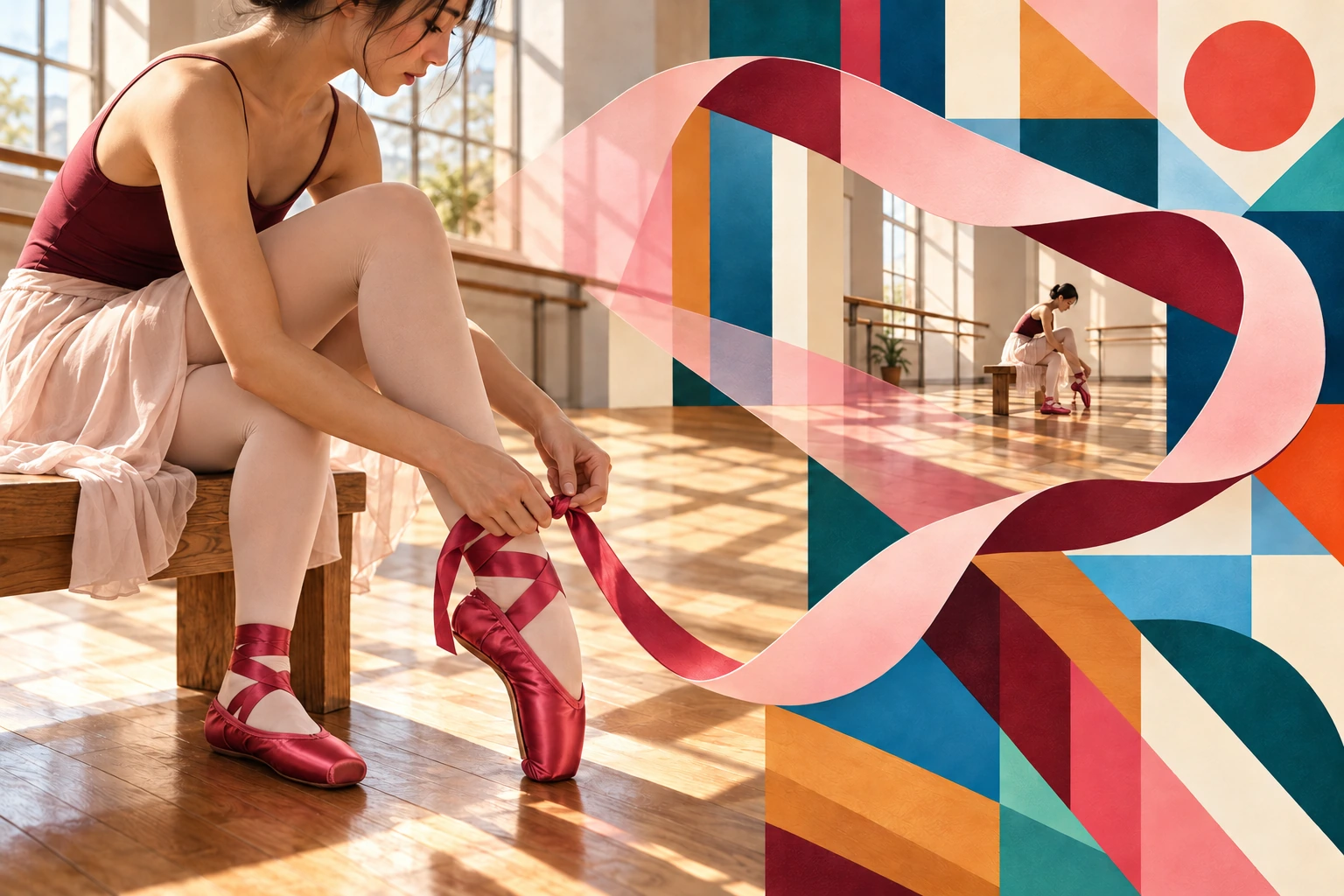
My daughter loves One More Idea, a song I made for an older friend. She can already hum it.
A few days ago I mentioned an idea: take dance or figure-skating footage we love, remove the original music, and make special cuts for these songs. My daughter immediately said, “What about number 317 from the 2024 Lausanne competition, the one who danced to You Make Me Feel Like Radio?”
She meant Paloma Livellara Vidart, candidate 317 at the 2024 Prix de Lausanne, dancing Christopher Wheeldon’s You Turn Me On, I’m a Radio.
We found the footage, muted the music, and played One More Idea. It fit surprisingly well.
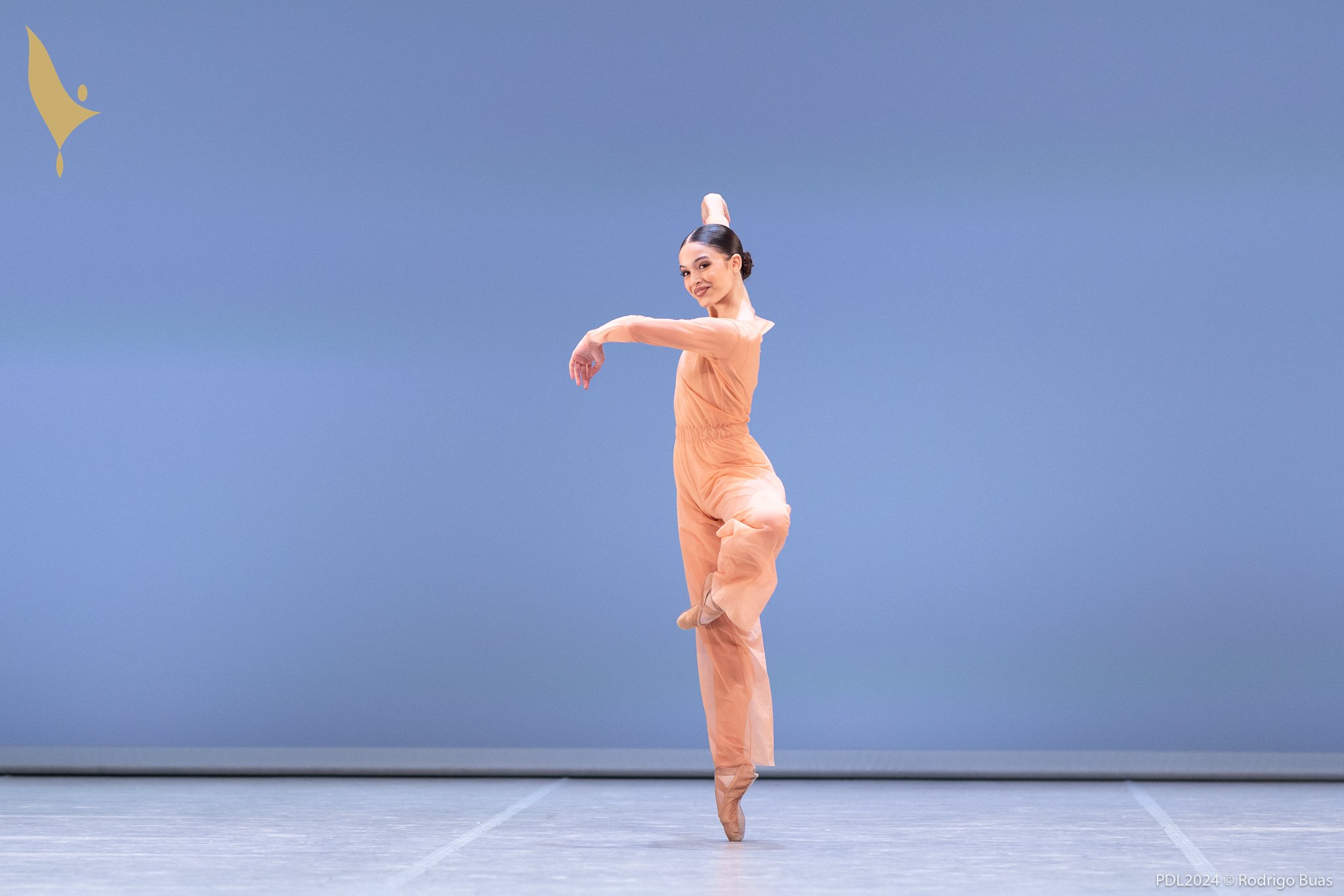 Watch the original performance
I think my daughter remembered that particular dancer because Paloma’s musicality is unusual. There is something very free about her phrasing. She does not seem to organize every movement around the obvious bars and beats. The choreography remains completely musical, but the movement sometimes crosses the structure of the music rather than marking it.
That is also something I intentionally did in the song. A word can straddle several notes; a phrase can continue across the regular beat. The pulse remains underneath, but the vocal line creates an illusion of rubato.
One More Idea (2)
Lyrics
I have so much life in me—
don’t put it all in the past.
If I ask for help with a bedsheet,
that’s exactly what I’ve asked.
And if I ask you to repeat it,
I want the whole story through.
I have so much life in me—
and I want to hear yours, too.
I did not have good language for what I was seeing in Paloma until I looked for professional commentary afterward. An interviewer had independently described her performance as so “fresh and free” that it almost appeared improvised. Paloma said that, in a way, it was. Once she knew the choreography, her coaches worked with her on interpretation and encouraged her to imagine different people around her and play with them. She could therefore inhabit the same choreography somewhat differently each time.
That helped me name what my daughter had somehow recognized instantly: Paloma phrases movement almost as if it were speech.
Then this morning something else happened.
My daughter was eating her breakfast egg while I was playing a song made for another friend, It Helps If You Just Don’t Care. Suddenly she said, “I think this song applies to me too.”
She was thinking about where she chose to give her attention. Someone frightened, hurt or experiencing something unfair deserved it. Another person’s attempt to provoke a reaction might not.
This is the same child who initially refused when I simply said, “Come volunteer with me.” She still had not met these residents. Yet now she recognized them through their songs, was curious about their personalities, wanted to show them her ballet, and had even started imagining asking them for advice.
We became so absorbed listening that we were running late. Somewhere on the drive I started thinking about memory. The repeated line in a song is remarkably hard to lose. Someone may have said a sentence once in conversation. Once it becomes the defining line of a song, we hear it again and again until my daughter is singing it and applying it to herself.
That reminded me of another child I knew who could recite hundreds of ancient Chinese poems. Her father said one trick was to sing them. There were children’s programs that turned individual classical poems into songs.
I went looking into the research on “musical mnemonics.” A systematic review brought together thirty-seven studies; twenty-eight reported a benefit to some aspect of memory from sung presentation. The participants, tasks and results varied. That is not a basis for claiming that a song I make will treat anyone’s memory difficulties. But it gave me another way to think about what we were already noticing at breakfast.
And then I thought about Luther. I had encountered his belief in the power of music while learning about Bach: music as a way of bringing people into contact with religious ideas and with God. But Lutheran practice also used singing quite concretely for education. Children learned hymns and catechetical material through music and eventually knew the words by memory.
Children carrying Chinese poems in songs; Lutheran children carrying theology in hymns; experiments comparing sung and spoken information. I had known these things separately. What I had not considered until this morning was the production constraint.
Suppose someone has lunch with her daughter. A young visitor comes and dances for her. Something funny happens. She says one sentence worth remembering. Could those fresh experiences become a song while they are still fresh?
Until recently, doing this continuously would have been absurdly expensive. Someone would have to interview her, find the meaningful material, write lyrics, compose, arrange, record, and produce a new piece—then do it again next week. AI changes that constraint.
I have been making songs from people’s long lives. I had not thought about making songs from last Tuesday.