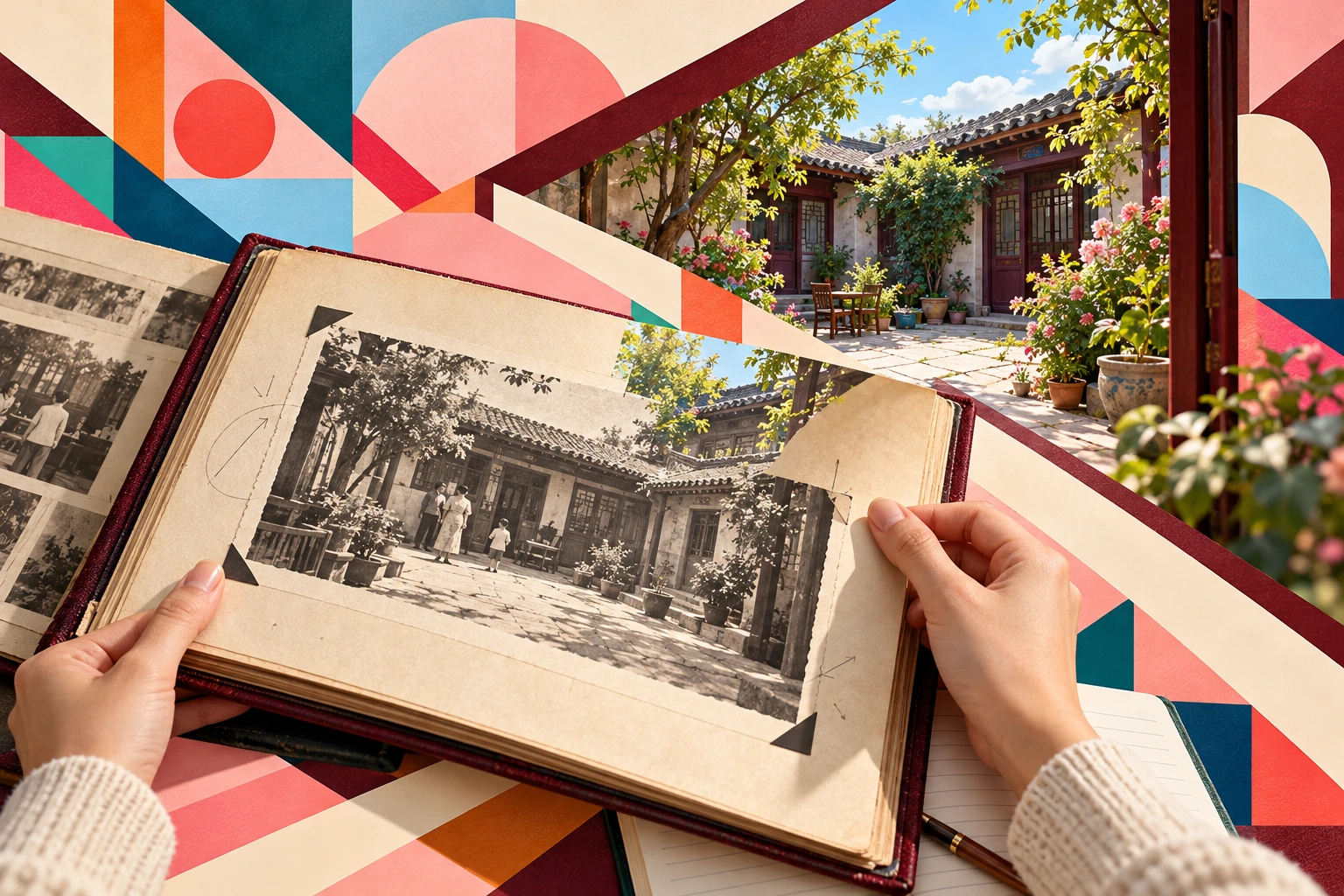
After working on my maternal grandfather’s album, the first complete multimedia family work I made was about my other grandfather, Wang Xiuping, my father’s father. My father and his two sisters told me stories. The older of my two aunts brought his old iPad, with the photographs and films he had treasured late in life, including a visit she had made with him to the ancestral house in Penglai.
My younger aunt could turn almost anything into a comic story. Listening to her childhood stories, I was surprised that this considerate, tactful woman had once been so bossy and so utterly unafraid. Together, their stories were by turns moving and funny. Their memories, my father’s, those of other relatives, and the materials I found elsewhere gradually became a fuller and more interesting account.
I first put the material into an essay. Later, I wrote lyrics and used AI to set them to music, then sent the song to the family. My aunt and my mother said the words were hard to hear; it would help to see them. Back in America, preparing a presentation for a senior-living community, I made a music video using real photographs, archival material, imagined reconstructions, and subtitles in Chinese and English. I sent it to the family chat. My mother said, “I really do like this.”
I remembered her questions about consulting: What did I do? What did other people get from my work? This time, the work was before her, and she could tell me what she felt. I had brought my aunts' words together and shown them things they might not have known, things other people remembered. Other family members had responded to the longing in their accounts.
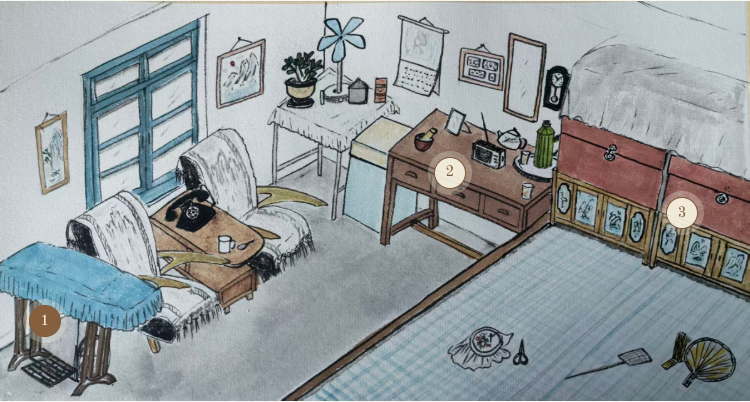
Before, I had sat at a computer polishing a large product for imagined users. Now, if people could not hear the lyrics, I added subtitles. If the courtyard was wrong, I looked for photographs or asked someone to draw it. If the interview recordings became unmanageable, I made tools. Each problem came from the people before me and the work in hand. Once it was solved, I could see whether something worked and whom it had moved. Memories once held separately were becoming something the whole family could watch, discuss, and add to. In remembering the older generation, we were acquiring a new shared experience of our own.
Even if I turn the archive into something beautiful, my creative expression still represents my relationship to the memory. My grandfather is my father’s father. He is my aunt’s father. He is my daughter’s great-grandfather. He was somebody else’s colleague, brother, neighbor or friend. We can look at exactly the same person and encounter very different meanings. What moves me may leave my father relatively unmoved. A detail I consider central may seem incidental to my aunt. Something my daughter notices may never have occurred to any of us.
So I do not want to occupy the center stage as the professional storyteller who decides what the family story means. I want each person to be able to take over part of the creative process.
I still needed to earn a living and was still testing how this work might become a sustainable undertaking. It had already given me and the people involved a clear sense of value, yet remained difficult to explain briefly to acquaintances who knew none of the background. Once, a company name and a title had been enough. Now there was much to explain before someone could understand what occupied my days. I actually knew more clearly what I was doing and could feel its value more directly, while finding it harder to introduce myself. This required patience. It also tested whether I truly believed in the path I had chosen.