
Celia did not like her grandchildren calling her Grandma. I do not actually know why. Maybe she disliked the way the word aged her. Maybe she preferred being called Celia because that was still her own name, the name of the woman she had been before she became anyone’s grandmother. But her granddaughter remembered this detail decades later.
I began to wonder whether her granddaughter might have absorbed some of that spirit herself. That is why, in the imagined finale, when Celia asks, “Are you a grandmother now?” and “Do they call you Grandma?”, the question almost sounds like: Did you become a little like me?

The whole process of Finding Celia is already doing something strange with time. Her granddaughter originally remembered Celia as the grandmother she knew in childhood. That was an older Celia. Her granddaughter had never seen the woman in the 1918 yearbook.
That young woman did not exist inside her granddaughter’s own memory. So this search is doing more than recovering memory. It is giving her access to a piece of history that she herself never possessed.
The first reversal happens through research. We begin in 2026 and keep moving backward: 1970, 1946, 1928, 1925, 1918, 1915, 1905. Every document takes us deeper into a life that had already finished long before we began looking.
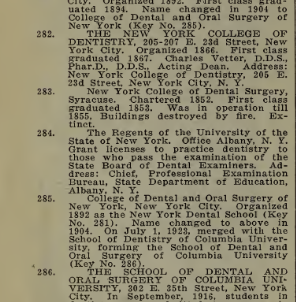
Celia begins as a remembered grandmother. Then she becomes a name in a cemetery record, a dentist in a professional register, a student. And finally, when the yearbook opens, she becomes young.
But something else is happening at the same time. Her granddaughter is becoming younger too. When she searches for Celia, she is also re-entering the relationship in which Celia existed. She becomes Celia’s granddaughter again.
That identity never disappeared. Other identities accumulated on top of it: adult, wife, mother, perhaps grandmother. But when Celia becomes vivid again, the much earlier relationship resurfaces with her. She discovers a young grandmother she herself never met, while simultaneously getting closer to the child she was when she did know Celia.
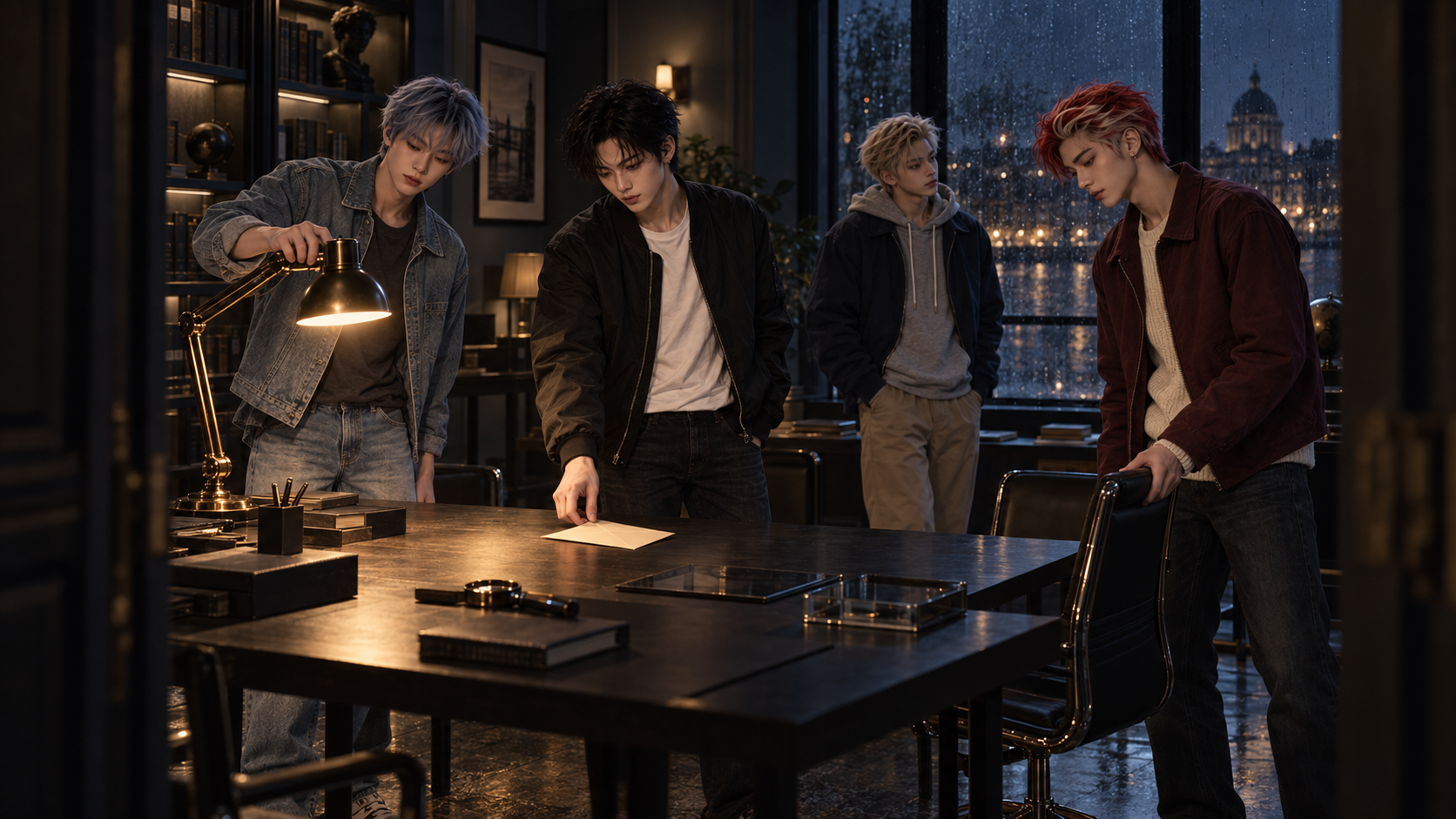
The later visual studies give the quartet two worlds. They gather around a research table as four ordinary friends, then reappear on a rain-soaked street with guitars, microphones and drums. A name in an old register can lead into a film whose emotional language comes from somewhere quite different.
That made me question one of the most predictable assumptions we make about older people and memory. We often assume that if we are creating music, film, or memory experiences for someone in their eighties, we should give them music from “their era.” If someone was born in the 1940s, we reach for the music of the 1950s or 1960s, as though the correct emotional language for an older person must always come from the period when they were young.
But what if the activity itself is reversing time? What if her psychological position at that moment is “little girl trying to find her grandmother”? Why should she only be surrounded by music associated with her chronological youth? Why could a group of young men, using a contemporary language of youth, energy, encouragement, and affection, not sing directly to her now?
This is where the Y2K boy-band idea began to make much more sense to me. At first I chose that sound because I disliked the original finale. It was too mournful, too immersed in loss and nostalgia. Slow piano and strings kept pulling the story toward old age, death, and looking backward. I wanted something brighter: the open-hearted, polished pop-ballad energy of an early-2000s boy band.
But now I think the choice fits the underlying structure of Finding Celia. The young men in the foreground can look at her with warmth, cheer her on, tease her a little, ask her what happened next. Within the emotional logic of the finale, they are carrying Celia’s gaze toward her. And in that gaze, she is still her girl.

A breath before the chorus

Recognition, sung directly to the listener
The historical materials can continue moving behind them: the handwritten name, the marriage certificate, the wrong grave, Montefiore, 282 and 285, the yearbook portrait, the timeline, the unopened archive box. The foreground carries youth. The background carries history.
At the same time, Celia is released from the role of “grandmother.” She becomes the woman in the 1918 portrait. So the finale brings two younger identities into the same emotional space: young Celia, and her little granddaughter. They are separated by more than a century of history, but the search allows them to occupy the same moment again.
That is why I now think the phrase “time folds because love remembers” can go one step further. Memory is only part of it. Searching can create time.
Documents, photographs, music, games, oral history, and imagination can briefly make earlier versions of people accessible again.
And then, in the imagined final song, that young woman looks back and asks: What about you? Where did you go during all those years I never got to see?