
When I was younger, I loved finding an exceptionally good mathematics or physics reference book. I'd be struggling with a difficult chapter, trying to understand an idea from several directions, when I'd come across a book that explained it beautifully. I remember the excitement of discovering that someone else had already thought about the problem in a way that made it suddenly more interesting.
Recently, I experienced that feeling again. This time, it began with questions about my own work. I had set out to help older people reconstruct their memories, recording as faithfully as possible the joys and sorrows of their lives, then using that material for historical research and meaningful creative work. Yet what someone is willing to say in an interview is not necessarily what she wants preserved, repeatedly revisited, or left for her family.
I found myself thinking: Good heavens, I am not a trained counselor. Should I change the subject? I had come to do oral history. What would I be able to deliver?
I remembered a training session at McKinsey about active listening: ask more questions; do not rush to solve the problem. We watched a short film in which a wife described things that were troubling her. She wanted her husband to understand and validate her feelings. He kept analyzing the problems and offering solutions, sometimes telling her how simple they were. She became angrier, and the conversation ended badly. I have always remembered that example. Did the other person simply need someone to listen? Was I making the husband's mistake?
My consulting habits were still there: I wanted to give an untidy problem some structure. Control, influence, observation—what could one decide, what could one only influence, and what could one only accept? But being able to come up with a framework did not tell me whether I was being useful.
Afterward I remained uneasy and dissatisfied. I felt there was something else I could do. What it should be, and how to do it, would require considerable care.
I began thinking of particular people in literature, painting, music, science, sport, and history. An Olympic athlete suddenly losing the ability to compete, a musician losing hearing, a painter losing sight, or a mathematician such as John Nash discovering that he could not entirely trust his own thinking might all struggle with losing a cherished ability, identity, or future.
I did not want to hand someone a long list of books and films that would take hours to get through. I wanted a painting, a piece of music, a photograph, a moment in a sporting event, a decision made by a real person: something we could enter in a few minutes and discuss at length. The conversation would have a third object. The other person could comment on someone else’s choices, even argue with me, without having to return to her own difficult experiences each time.
I'd borrowed Harold Bloom's Falstaff: Give Me Life from the library a few weeks earlier. I knew very little about Falstaff. My last serious encounter with Shakespeare had been in college.
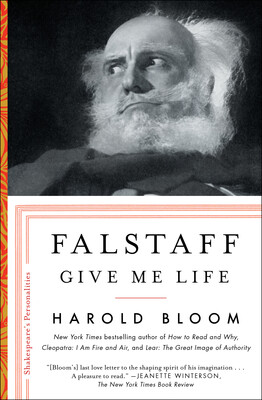
But I began reading Bloom with these questions in mind. I became fascinated by Bloom himself, particularly how his understanding of Falstaff had changed over the course of his life. The book became a way of getting acquainted with another person.
Bloom was twelve when he first found company in Falstaff, and eighty-six when he wrote this book. That is a very long acquaintance with an imaginary person. What interested me was how much could still happen within it: a reader could grow old, change his mind, return to a familiar scene and find that the person he had thought he knew had something else to say.
And I wanted to share the discovery. Just as I once wanted to show someone the wonderful reference book I’d found.
By the next visit, I had assembled twenty-four encounters with literature, music, paintings, films and the people who made them. There were longer readings behind each one, but we could begin with a page, a picture, a scene. I brought them back to the friend whose questions had sent me looking.
I had forgotten to bring the Bloom book itself. When I told her about it, she said, “All right, just write it down.”
One was Beethoven’s Heiligenstadt Testament, the letter he wrote to his brothers in 1802 and never sent. She knew the Ninth Symphony; she had not read the letter. Here was a much younger Beethoven, afraid that people would take his withdrawal from company for arrogance. He could not hear what they heard. The difficulty of an ordinary conversation had become part of his isolation.
O you people who think or say that I am hostile, stubborn, or misanthropic, how wrongly you judge me. You do not know the hidden cause of what seems that way to you.
Beethoven, opening lines of the Heiligenstadt Testament · translated excerpt
“Humiliation, isolation, and despair,” she repeated from the reading.
Then we moved from the private page to the symphony. Twenty-two years later, human voices enter the final movement of the Ninth. The man who had found company so difficult imagined a musical fellowship large enough to include multitudes. I was interested in the daring of wanting that brotherhood when there was so little assurance that people would offer it to one another.
“Oh, I love that,” she said. “He wants to have brotherhood.”
The letter did not foretell the symphony. Between them were years of work, experiment, illness and difficult relationships. I did not want to make the later music cancel the earlier page. What held my attention was the possibility of making something whose generosity exceeded what its maker could count on receiving.
Another reading began with two inexpensive wall clocks. In Félix González-Torres’s “Untitled” (Perfect Lovers), the clocks begin together, but each has its own mechanism. They can drift apart. One can stop. Someone can also set them together again.
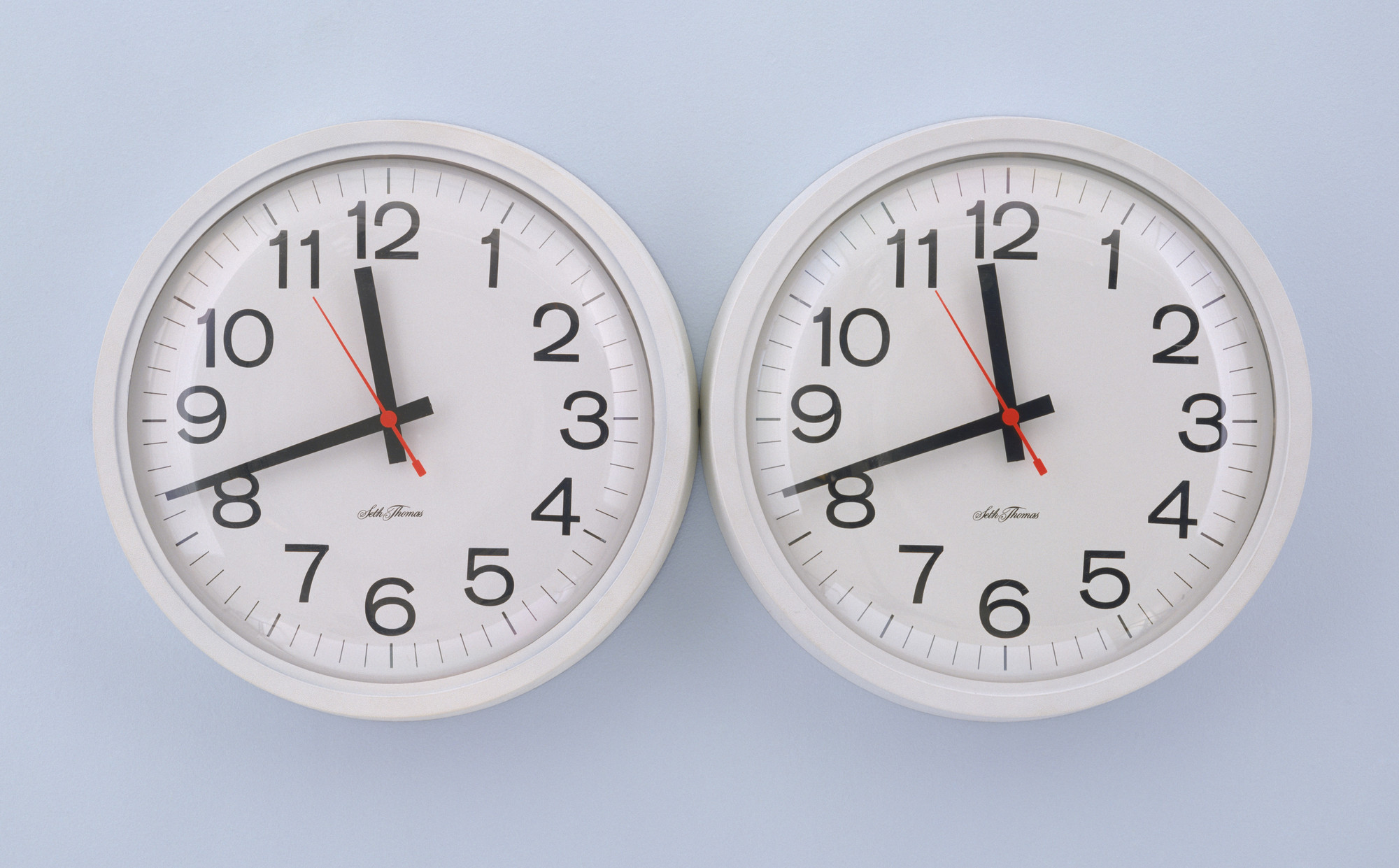
My reading arrived at “the refusal to despise a companionship because it cannot last.” She interrupted: “How do you know it cannot last?”
Reading that exchange again, I hear a question I had moved past too quickly. What did “last” mean—the movement of a clock, the years two people have together, or their love? My sentence had travelled between those possibilities without stopping to distinguish them. Her question is worth keeping beside the reading.
She asked who had written the passage. I told her it was partly her, partly me, partly AI. Without our conversations, I would not have gone looking in this particular way; without choices about what to ask, what to read and what belonged together, the tools would not have assembled this particular collection.
With Matisse, the discussion became less solemn. The Snail is nearly three metres square. I compared it to the size of the window. She wanted to know about the colored paper. We looked for the snail.
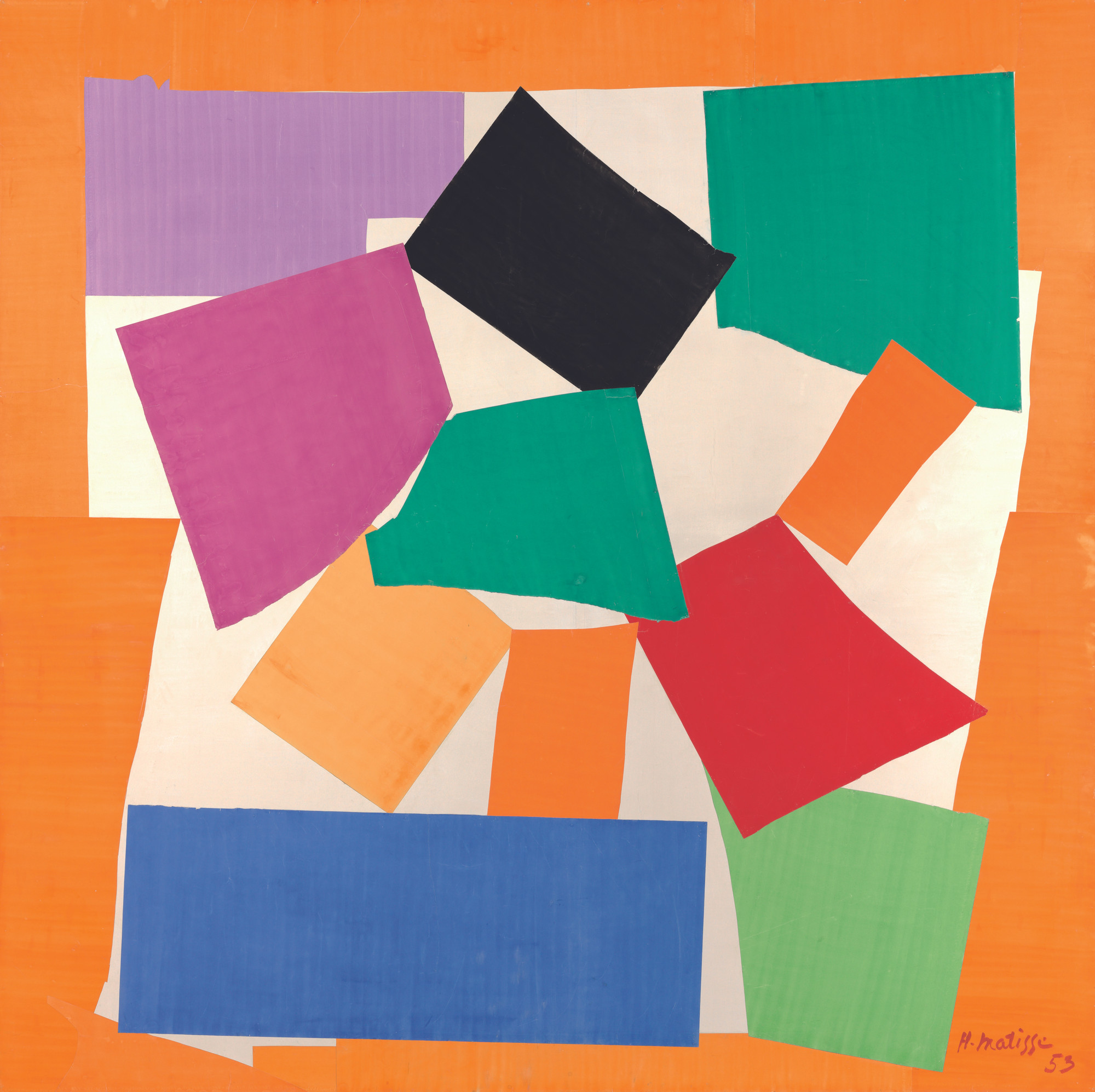
“Okay, we don’t see the snail,” she said. I couldn’t see it either.
I had prepared a reading about the spiral emerging through the movement of color. Now there were two of us looking at the image, unable to find what the prose so confidently described. The reading could start us off; we still had to look. She went on to tell me about the warm, earthy colors she liked, and the blue she had worn because it was what the shops sold.
These conversations were also following me home. On my birthday, my daughter wore a yellow raincoat she did not particularly like because she knew it would please me. I had bought it wanting something for her; she put it on wanting something for me. Thinking about my friend, I noticed the gift my daughter was giving.
When I made the next encounter, I placed her responses beside the works. Beethoven’s letter now had the words she had paused over; the clocks had her objection; Matisse had the snail neither of us could see. I also brought in the raincoat. Our conversation had changed what I noticed in my own life, and that belonged in the account too.
Before we parted, she became concerned that I might get sick. She went off and, about two minutes later, came back with two masks.